
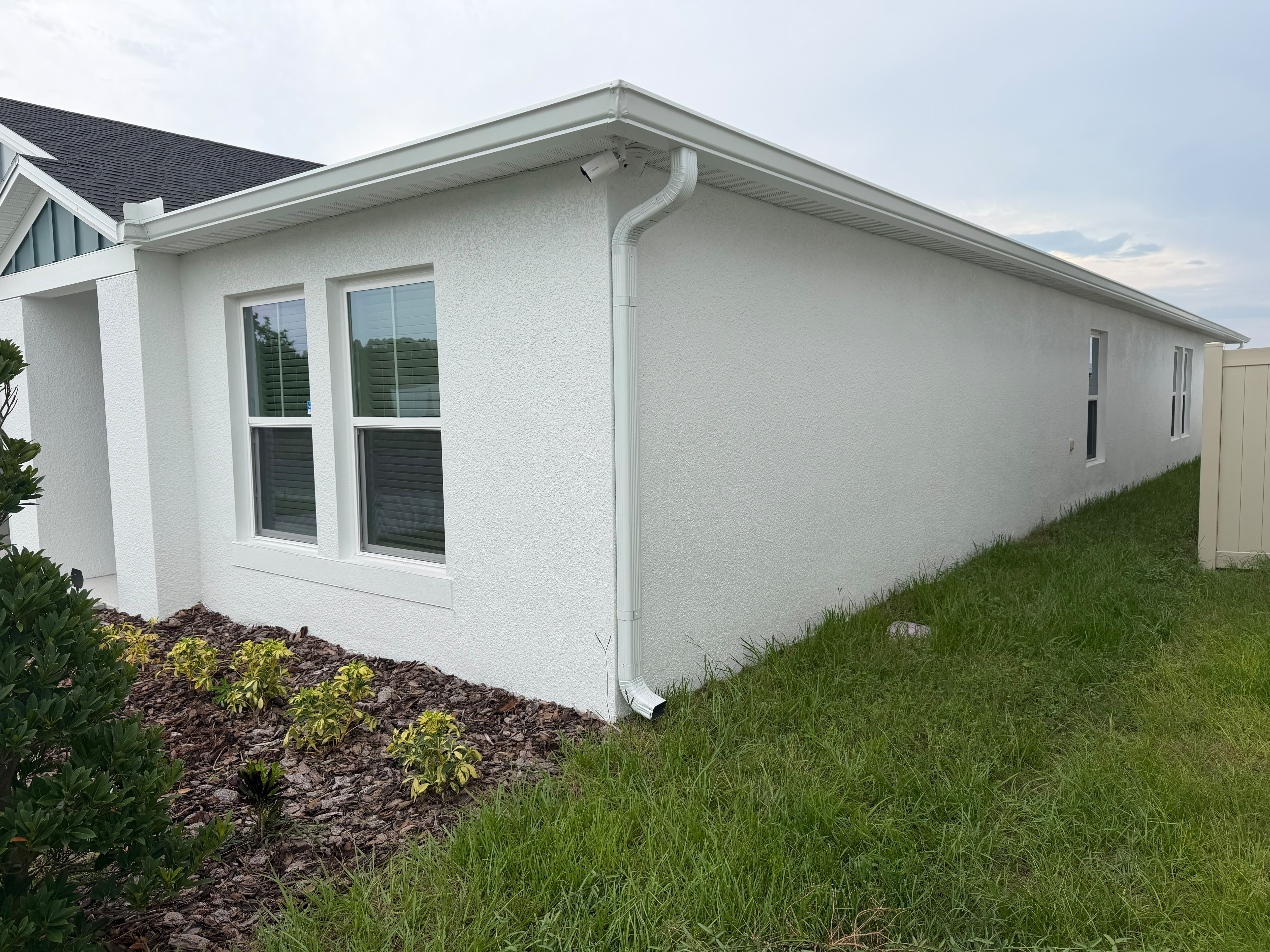
Start with the roofline, then measure the scope.
Linear footage is an important measurement, but it is not the full project. The roof edges to be covered, roof shape, valleys, story height, access, fascia condition, existing gutter removal, and the areas where runoff lands all affect what the property needs. A free assessment gives the homeowner and installer a chance to evaluate the same roof-water route before a written scope is issued.
System choices change the work behind the number.
The estimate may need to account for 6-inch or 7-inch gutter selection, premium aluminum or specialty material, color coordination, outlet quantity, 3×4 or 4×5 downspout planning, gutter guards, soffit or fascia coordination, and commercial or specialty conditions. These are not automatic upgrades; they are evaluated when they solve a real property requirement.
Access and existing conditions matter.
Tile roofs, multi-story elevations, long runs, difficult access, existing system removal, visible fascia concerns, landscape protection, and practical discharge locations can change the installation approach. The written scope should identify what is included, what requires evaluation, and any property-specific conditions that could affect the work.
Compare the full written scope, not just a headline number.
When homeowners compare proposals, it is useful to look for the gutter profile and material, downspout quantity and route, fastening approach, outlet placement, removal, debris-protection options, visible components, cleanup, warranty terms, and exclusions. PrimeFlow provides a free, no-obligation assessment; final project and payment terms follow the customer’s written agreement.