
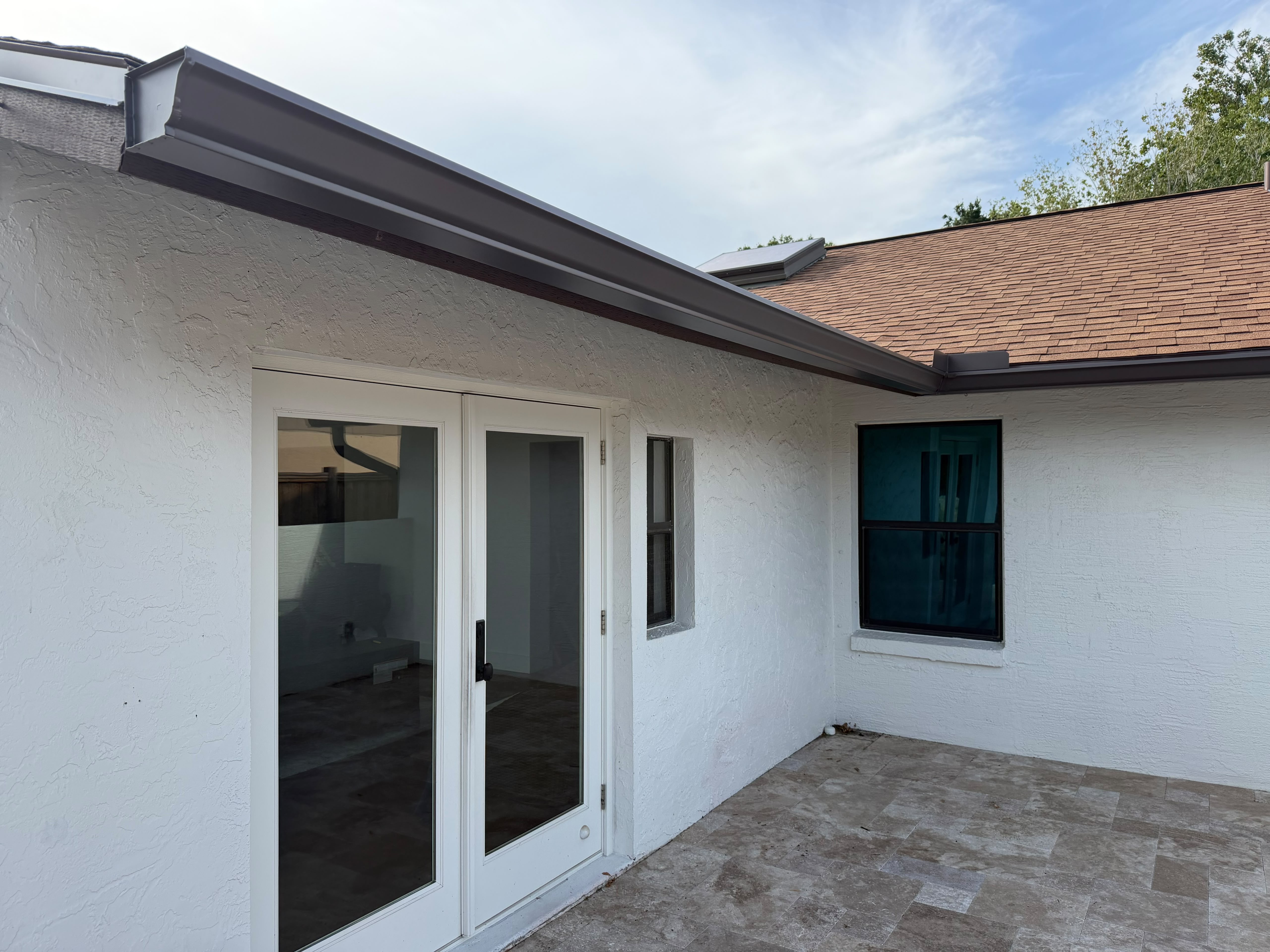
Start with the debris pattern around the property.
Leaves, roof grit, seed pods, needles, and other material can enter an open gutter. The specific roof edge, nearby vegetation, roof surface, valley pattern, outlet locations, and existing gutter condition should inform whether a guard is likely to add practical value at that property.
A guard supports maintenance; it does not end it.
PrimeFlow positions gutter guards as a way to reduce debris entry and cleaning frequency, not as a promise that maintenance disappears forever. Debris can still collect around roof edges, on top of a guard, near outlets, or at downspout transitions. Periodic inspection remains a sensible part of caring for a roof-water system.
Guard compatibility begins with the installed system.
The gutter profile, fastening approach, roof attachment details, current alignment, outlet capacity, downspouts, fascia condition, and access all affect how a guard can be evaluated. Installing a guard does not correct a system that already has an unresolved pitch, outlet, capacity, or discharge concern.
Compare the service value in the full scope.
When evaluating guards, homeowners can compare material, installation approach, system compatibility, access conditions, visible finish, maintenance expectations, warranty terms, and what the written scope includes. The right choice should improve the property’s real maintenance conditions rather than add a feature that does not address an identified need.